
When people think about outdoor recreation in Maine, they often imagine quiet trails, rushing rivers, and crisp winter mornings on skis. But what many don’t immediately see is the powerful economic ripple effect that outdoor recreation brings to small towns like Skowhegan.
As Executive Director of Main Street Skowhegan, I’ve witnessed how investing in trails, riverfront access, and outdoor programs not only enriches our quality of life but also strengthens our local economy in ways both direct and indirect.
Outdoor Recreation Is Big Business
Outdoor recreation is often described as “play,” but it’s also serious economic development. Nationally, the outdoor recreation economy accounted for $563.7 billion in GDP in 2022, or 2.2% of the U.S. economy (U.S. Bureau of Economic Analysis). Closer to home, Maine’s outdoor economy contributed $3.3 billion in value added and supported nearly 29,000 jobs in 2022. (Trailblaze Roadmap) That means tens of thousands of Mainers are working in industries tied to activities like boating, fishing, hiking, and skiing.
These numbers tell us what many rural towns already know: outdoor recreation is not a luxury—it’s a growth engine.
The Local Ripple Effect
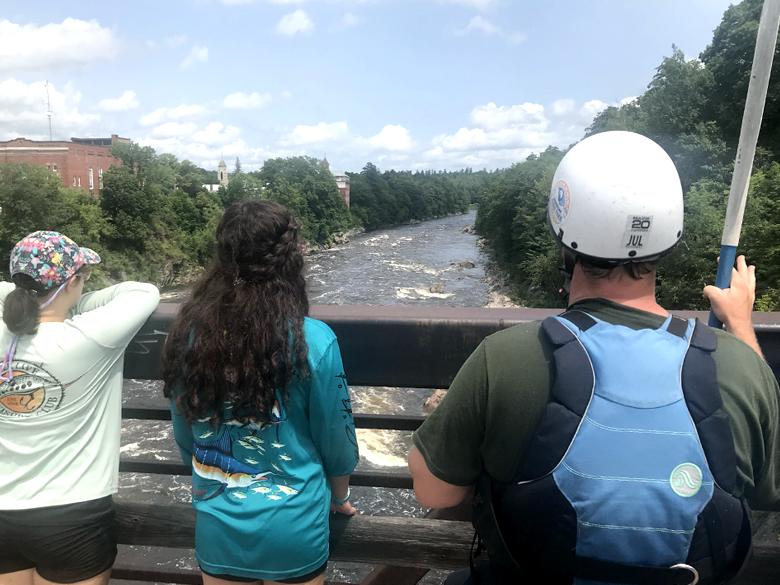
Here in Skowhegan, we’re seeing that ripple effect firsthand. When someone borrows a kayak from our Basecamp Gear Library or comes into town for the Kennebec River Ramble, their impact extends far beyond the river. Visitors buy coffee downtown, shop at local stores, and often come back with friends or family.
Research shows that for every $1 spent on outdoor recreation trips, an additional $1.72 of economic activity is generated in local communities (Outdoor Industry Association, 2022). That multiplier effect is huge for a rural town. It means that the investments we make in trail systems, paddling access, and events aren’t just about fun—they’re about fueling restaurants, lodging, retail, and even real estate.
Attracting and Retaining Talent
Outdoor recreation also plays a key role in workforce development. There are numerous studies that find that quality of life amenities—including outdoor access—are major drivers in where people choose to live and work. For Skowhegan, that means our trails and river are not only drawing visitors but helping us retain young families, attract entrepreneurs, and encourage remote workers to settle here.
When workers feel they can enjoy both meaningful careers and a vibrant outdoor lifestyle, they’re more likely to put down roots. That’s long-term economic development at its best.
Building for the Future
At Main Street Skowhegan, we’re committed to lowering barriers to the outdoors through programs like the Basecamp Gear Library, expanding opportunities for residents and visitors to enjoy the Kennebec, and building out trail systems that connect our downtown with the natural world around us.
Each of these initiatives represents more than recreation—they’re investments in a stronger, more resilient local economy. They create jobs, support small businesses, and make Skowhegan a place where people want to live, work, and visit.
Closing Thoughts
The ripple effect of outdoor recreation is clear: it begins with a paddle, a hike, or a bike ride and extends to our downtown businesses, our workforce, and our long-term growth. By continuing to invest in outdoor infrastructure and access, we are ensuring that Skowhegan’s future is as vibrant as the trails and rivers that surround us.
Because when the outdoors thrives, so does our town.